
README file from
GithubZotFlow — Keep Your Research in Flow
English | 简体中文
Your Zotero library, your reader, your notes — one seamless workspace inside Obsidian.
ZotFlow is a community plugin for Obsidian that brings the full power of Zotero into your vault. Read papers, annotate PDFs, generate templated source notes, and cite literature — all without ever leaving Obsidian.
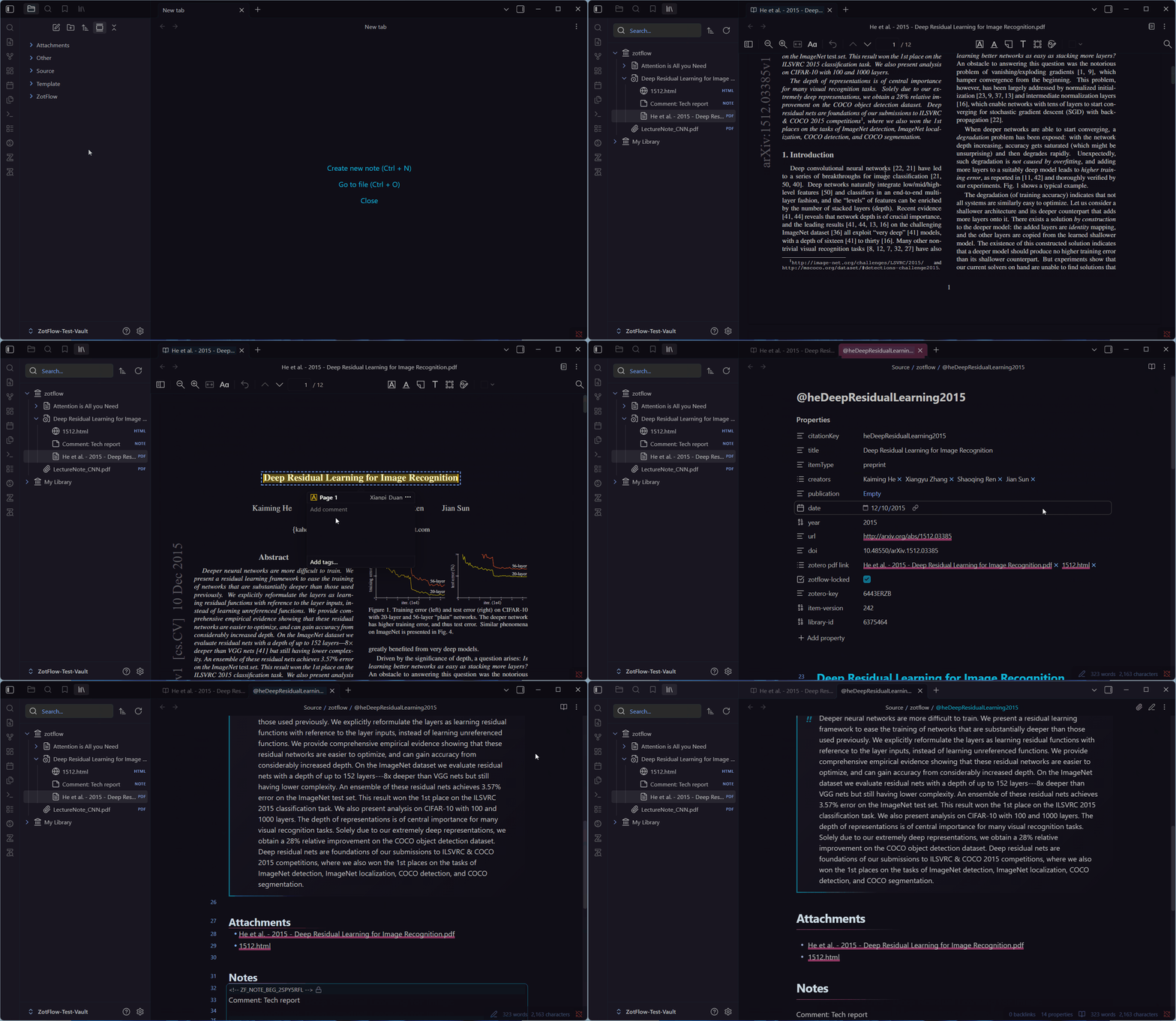
Why ZotFlow?
If any of these sound like you, ZotFlow was built for you:
- 📚 You want to read and annotate PDFs/EPUBs without switching between Zotero, a PDF viewer, and Obsidian.
- 🎨 You want your reader to match your Obsidian theme — dark mode, custom fonts, the works.
- 🔄 You want true bidirectional sync — annotations made in Obsidian flow back to Zotero, and vice versa.
- ✍️ You want every Zotero item to have an auto-generated, template-driven source note that always stays up to date.
- 🔗 You want to cite literature in Pandoc, Wikilink, Footnote, or raw citekey format — by drag-and-drop, autocomplete, or hotkey.
- 📂 You want to annotate any PDF or EPUB already in your vault, even ones that aren't in Zotero.
- 🛡️ You want an offline-first, privacy-respecting tool with no telemetry and secure credential storage.
What You Can Do With ZotFlow
🪟 Read & Annotate Inside Obsidian
A full-featured PDF/EPUB/HTML reader, embedded right in your workspace and themed to match Obsidian. Highlight, underline, draw, add sticky notes, capture image regions — every annotation type Zotero supports, in a window that finally feels like home.
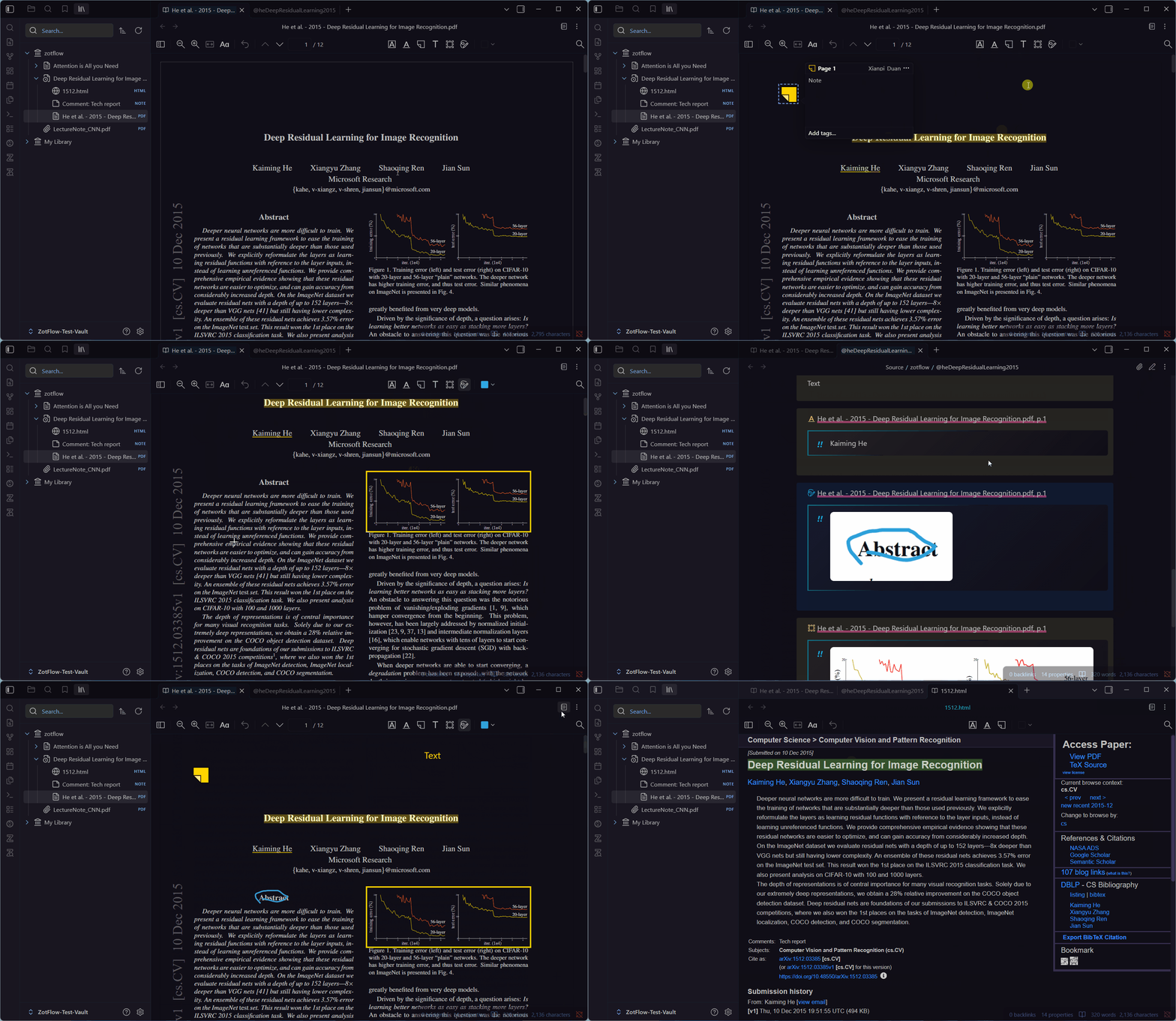
🔄 True Bidirectional Sync
Pull items, metadata, and annotations from Zotero — and push your changes back. Configure each library independently as Bidirectional, Read-Only, or Ignored. When conflicts happen, a field-level diff viewer lets you decide what to keep.
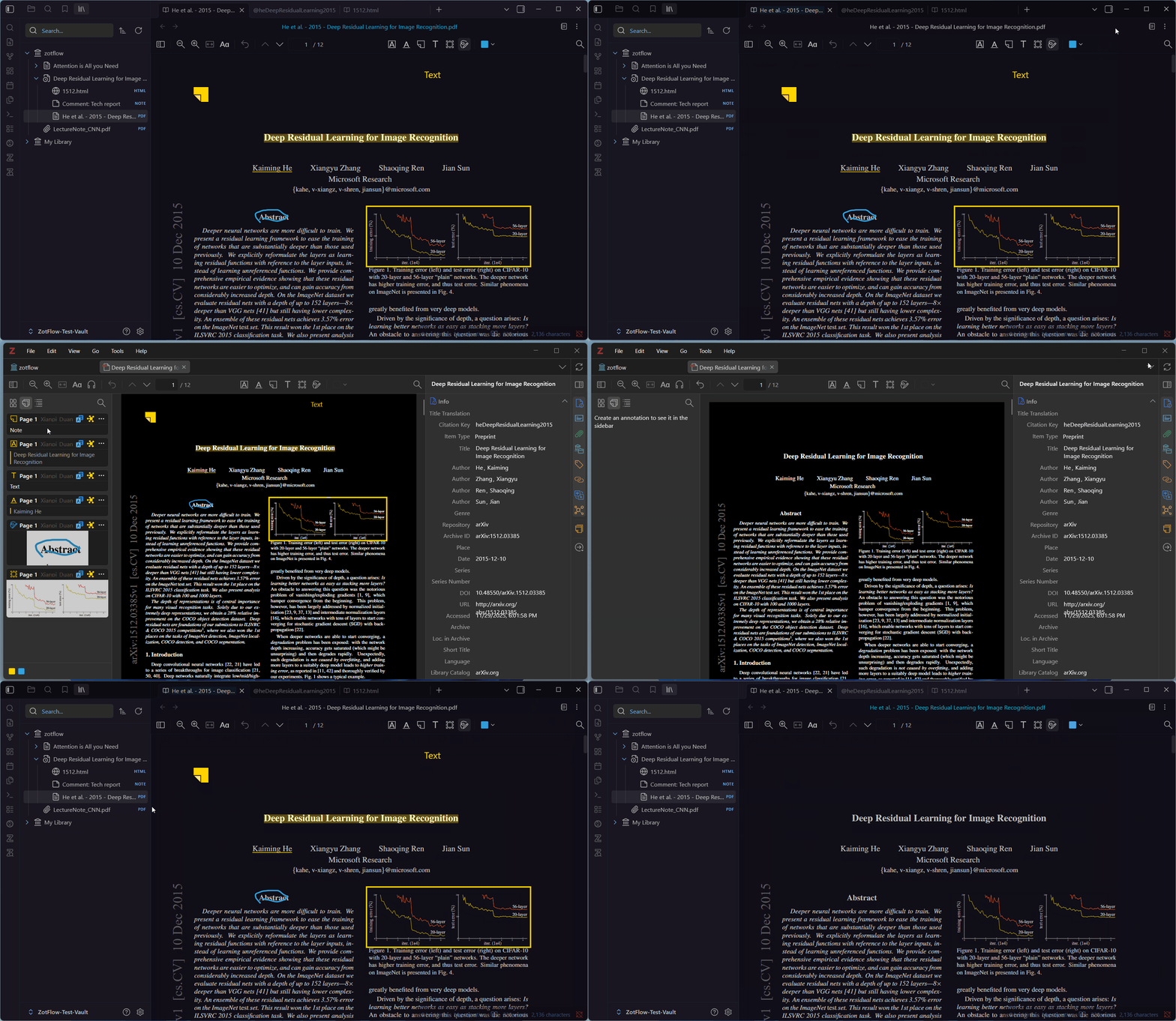
✨ Template-Powered Source Notes
Every Zotero item gets one auto-generated Markdown note, rendered with LiquidJS templates you fully control.
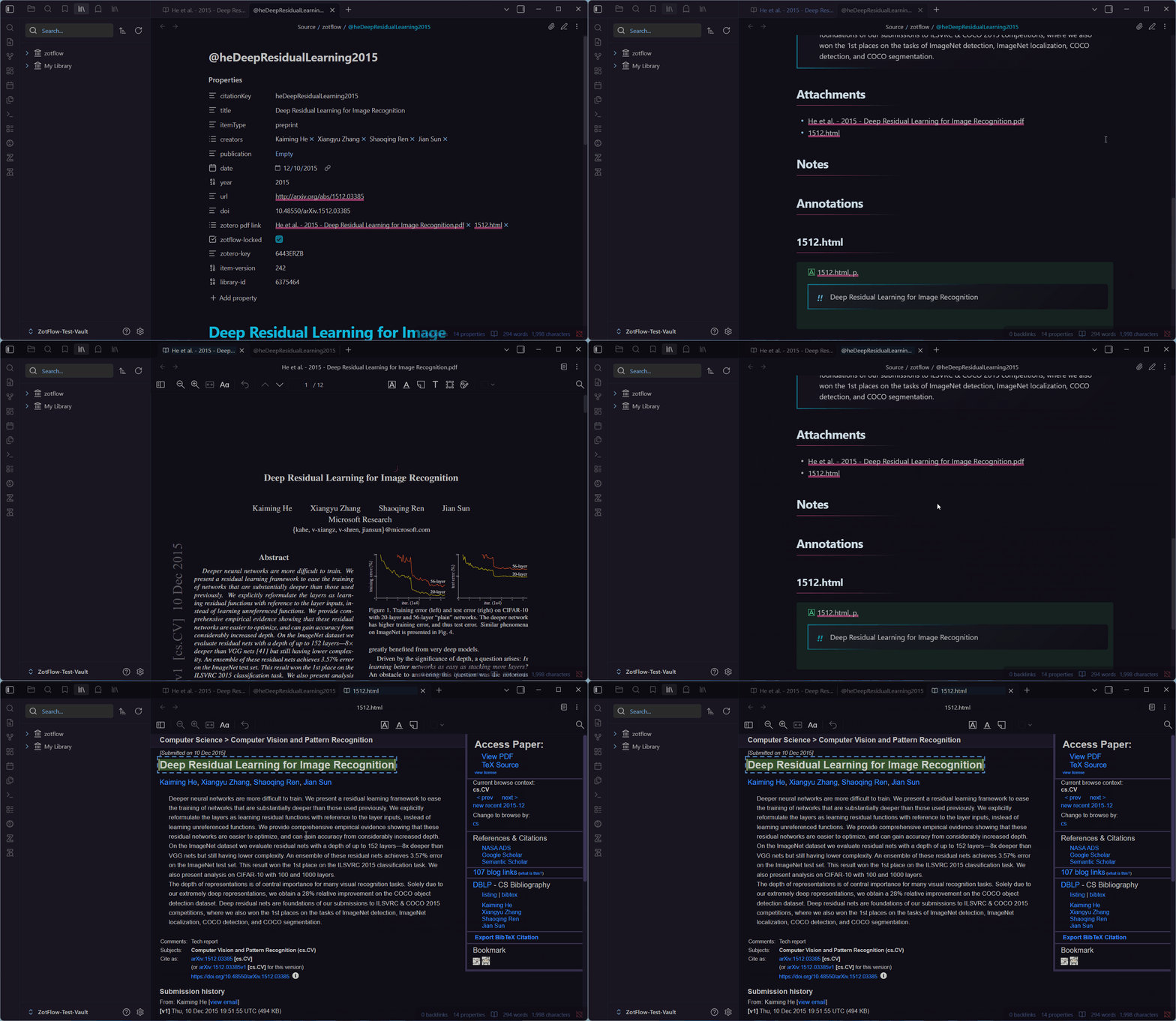
🗒️ Native Zotero Item Notes
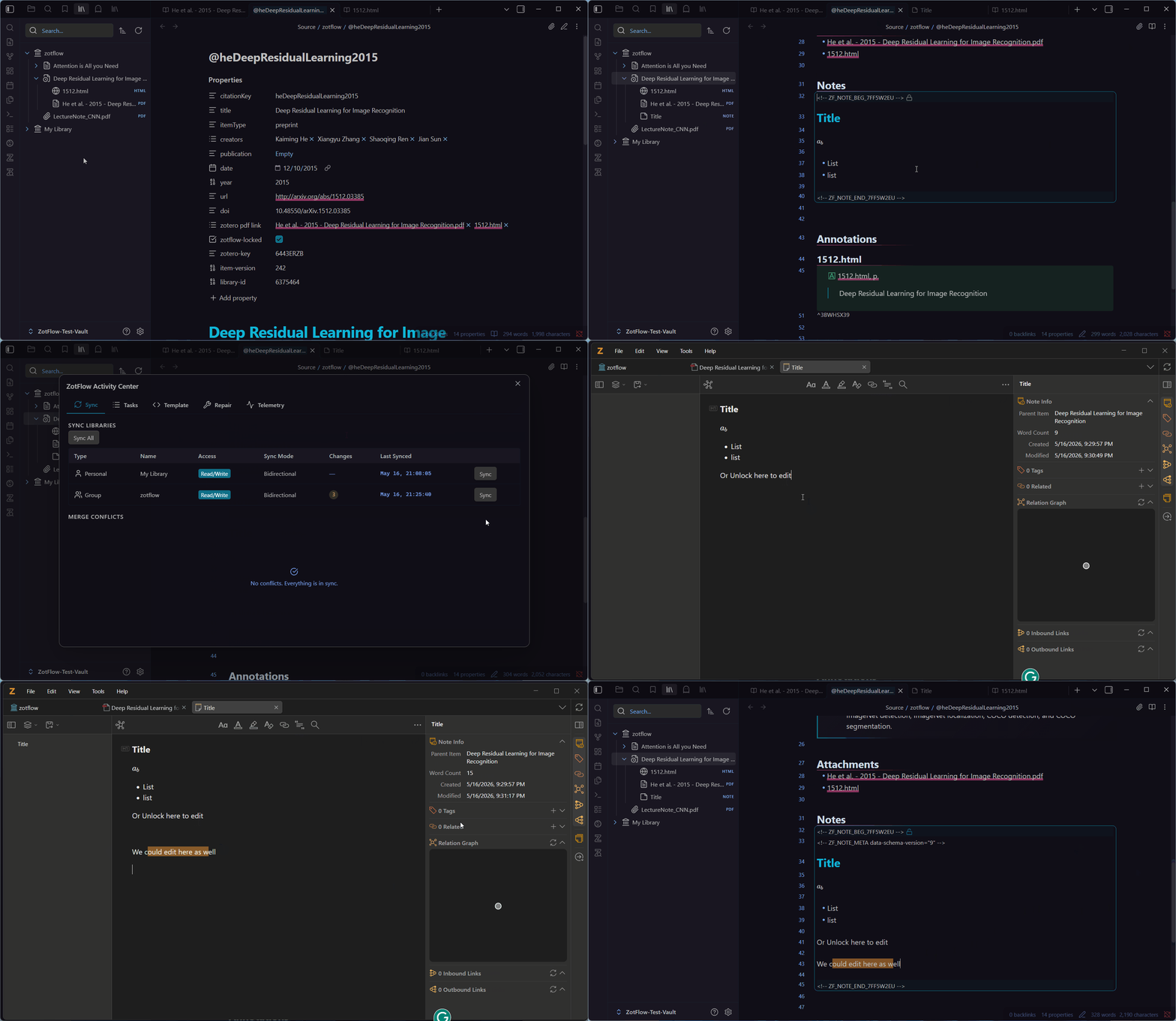
Create, edit, and delete Zotero child notes without leaving Obsidian. Right-click any item in the Tree View to add a note, edit it in a dedicated tab with Obsidian's full Markdown editor, or unlock its region inside the parent source note and edit in place. Every change auto-saves and syncs back to Zotero.
📝 Annotate Any Vault File
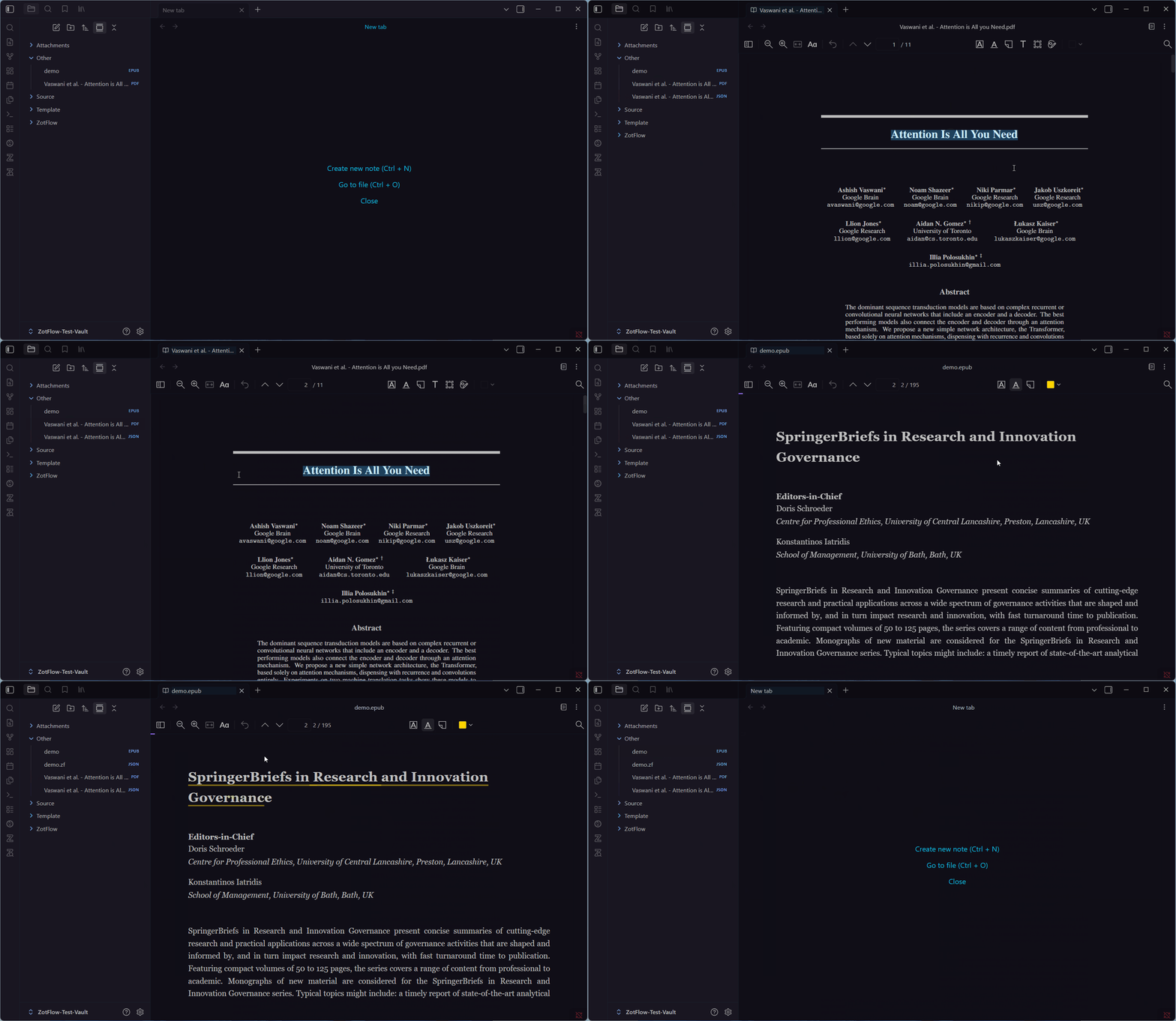
Have PDFs or EPUBs that aren't in Zotero? Open them with the same reader. Annotations save into a co-located .zf.json sidecar — no Zotero account required. Perfect for personal notes, downloaded papers, or books you're reading.
📎 Multi-Format Citations
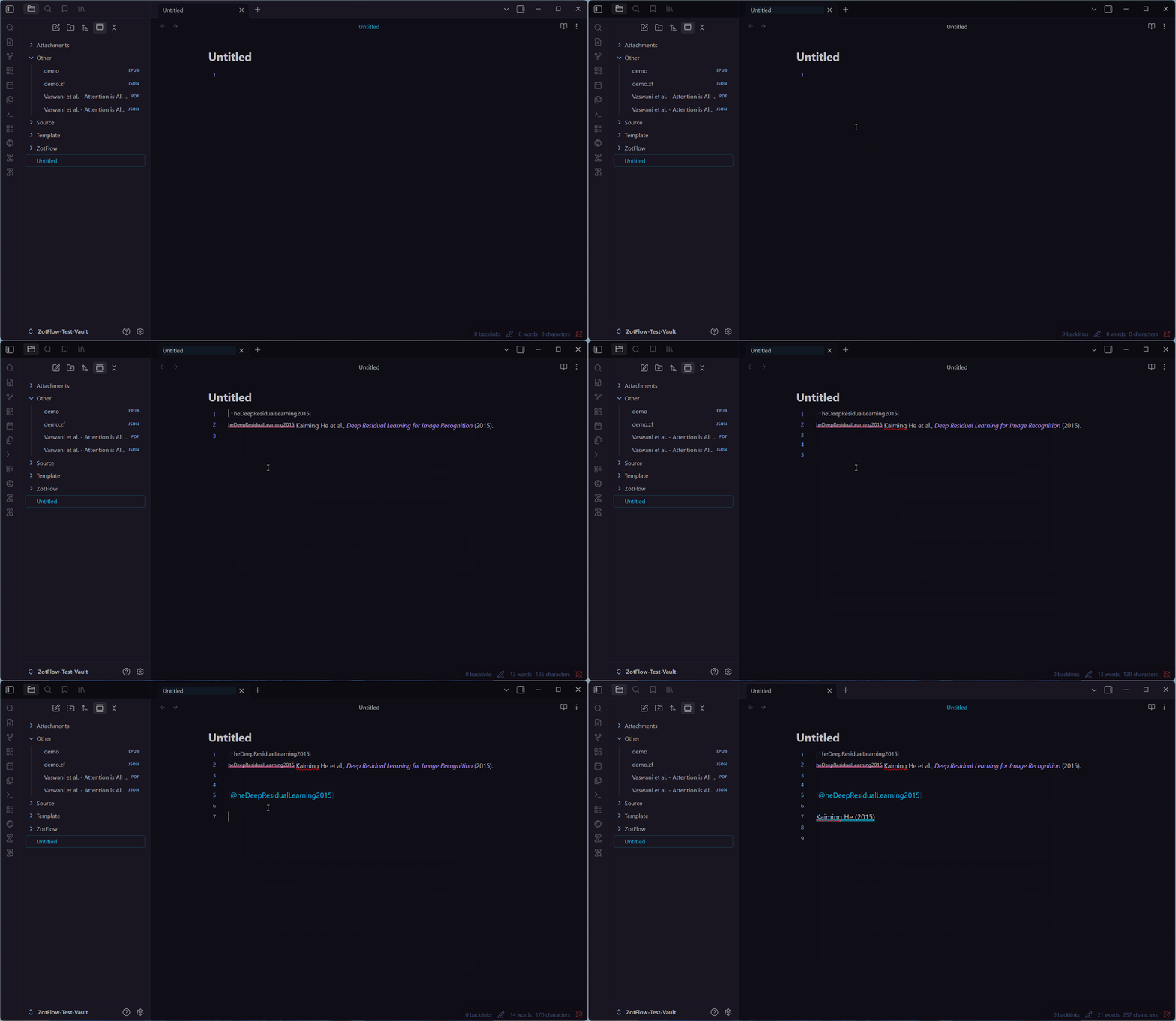
Insert citations as Pandoc ([@key]), Wikilink ([[Source/@key|Author (year)]]), Footnote, or raw citekey — via drag-and-drop from the tree view, autocomplete with a trigger string (@@), or copy-from-reader hotkeys. Include annotation context (page numbers, quoted text) automatically.
🌳 Zotero Tree View & Search Modal
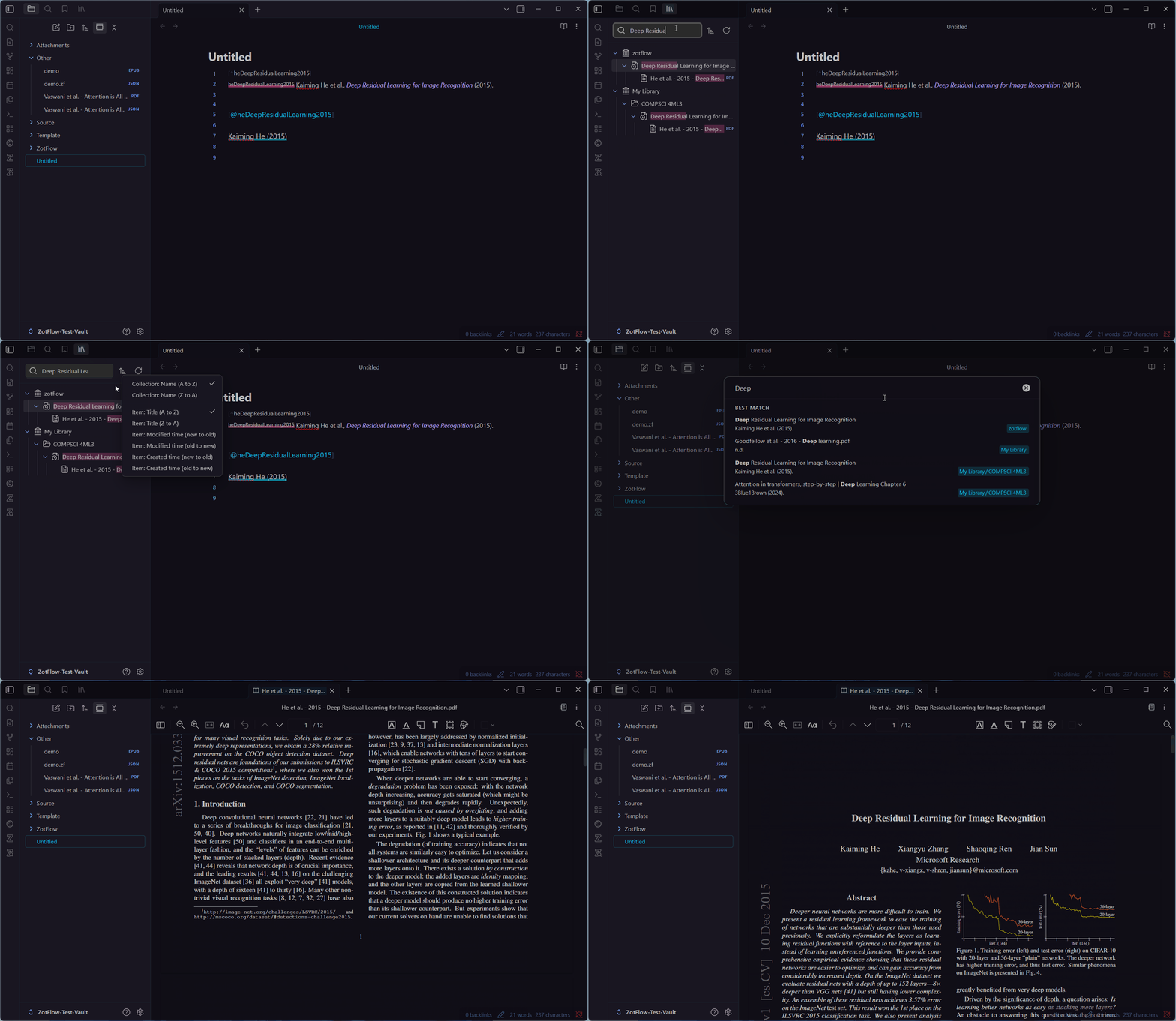
Browse your entire Zotero universe — libraries, collections, items, attachments — in a fast virtualized sidebar tree. Search, sort, drag, right-click. Click any attachment to open it; drag any item to cite it.
Or open the search modal from the command palette, type to filter your library, and hit Enter to jump to an item or open its attachment.
🛠️ And a Whole Lot More
- WebDAV support — download attachments from your self-hosted Zotero storage.
- Linked attachment base directory — works with Zotero's external file storage feature.
- Batch operations — generate every source note, extract every annotation image, re-render every template in one click.
- Activity Center — a control panel for sync progress, running tasks, and a searchable log console.
- Offline-first — everything cached locally in IndexedDB; the network is only used for Zotero and WebDAV.
- Secure credentials — API keys stored in Obsidian's platform-native
SecretStorage, never in synceddata.json. - Mobile-aware — built to be mobile-safe (current mobile support is limited).
Quick Start
New to ZotFlow? Start here:
👉 Read the docs website — the documentation site introduces ZotFlow's key concepts and design philosophy first, then walks you through installation and your first sync.
For the impatient:
- Open Settings → Community plugins → Browse, search for ZotFlow, install and enable it. (Or grab it from the Obsidian plugin directory.)
- Create a Zotero API key with read/write access.
- Paste it into Settings → ZotFlow → Sync and click Verify Key.
- Open the Activity Center (ribbon icon) → Sync All.
- Open the Zotero Tree View, double-click an attachment, and start reading.
Documentation
Read ZotFlow docs on the new website:
- English: https://zotflow.peterduan.dev/
- 简体中文: https://zotflow.peterduan.dev/zh
Legacy Markdown docs are still available in docs/, but the website is the source of truth.
Installation
Option 1 — Obsidian Community Plugins (recommended)
- Open Obsidian → Settings (⚙️) → Community plugins.
- Click Browse, search for ZotFlow, install and enable it.
Direct link: https://community.obsidian.md/plugins/zotflow
Option 2 — Beta builds via BRAT
For pre-release builds, install via BRAT:
- Install and enable BRAT from Community Plugins.
- In BRAT's options, click Add Beta plugin and enter:
duanxianpi/obsidian-zotflow - Enable ZotFlow in Community Plugins.
See the docs website for step-by-step setup: https://zotflow.peterduan.dev/
Architecture
ZotFlow uses a Main Thread + Web Worker split for responsiveness:
- Main thread — Obsidian API, UI rendering (React for complex views, native APIs for settings).
- Web Worker — Zotero API calls, sync engine, IndexedDB (Dexie), template rendering, PDF processing.
- Reader iframe — Zotero's PDF/EPUB/HTML reader, embedded and sandboxed via penpal.
Communication: Comlink (main ↔ worker) and Penpal (main ↔ reader iframe).
Development
Prerequisites
- Node.js ≥ 16
- npm
Setup
git clone https://github.com/duanxianpi/obsidian-zotflow.git --recursive
cd obsidian-zotflow
npm install
Build
npm run build:ci       # Full CI build (PDF.js + reader + plugin)
npm run dev:plugin     # esbuild watch mode (plugin)
npm run dev:reader     # webpack watch mode (reader, separate terminal)
npm run lint
Memory leak checks
With Obsidian running, start the lightweight CDP monitor with:
npm run memory:watch -- --vault "Vault name"
Press Enter for a passive sample, use g <label> for a double-GC checkpoint,
and q to detach the debugger and quit. Samples are written to
.memory-logs/ as CSV.
Local install
Copy main.js, manifest.json, and styles.css to:
<vault>/.obsidian/plugins/obsidian-zotflow/
Reload Obsidian and enable the plugin.
Privacy
- No telemetry. No analytics. No tracking.
- Network requests go only to the Zotero API and your configured WebDAV server.
- Credentials live in Obsidian's platform-native
SecretStorage. - The reader iframe communicates only via structured-clone messaging — no
eval, no remote code.
License
Author
Xianpi Duan — GitHub
Sponsor
Thanks for checking out ZotFlow! I'm currently a student building this on nights and weekends. If it helps your research, a small tip keeps the features shipping.
Acknowledgements
ZotFlow stands on the shoulders of some incredible open-source work. Huge thanks to the teams and individuals behind these projects — they inspired the design, shaped the architecture, and in some cases provided the actual engine running inside ZotFlow:
- Zotero Reader — the PDF/EPUB/HTML reader engine embedded in ZotFlow. Without this, there's no reader.
- Task Genius — the embeddable Markdown editor in ZotFlow is powered by Task Genius, which made it possible to have a full-featured editor without building one from scratch.
- Zotero Web Library — reference for understanding Zotero's data model and UI patterns.
- Obsidian Zotero Integration by mgmeyers — the battle-tested original that countless researchers rely on. ZotFlow owes a lot to its design decisions.
- ZotLit by aidenlx — a beautiful, thoughtfully built plugin that pushed the bar for what Zotero+Obsidian integration could look like.
- Zotero Better Notes by windingwind — inspired ZotFlow's approach to seamless note editing and the tight Markdown↔HTML note sync loop.
Roadmap & Feedback
Have ideas or found a bug? Join the Discord!