
README file from
GithubMurmur
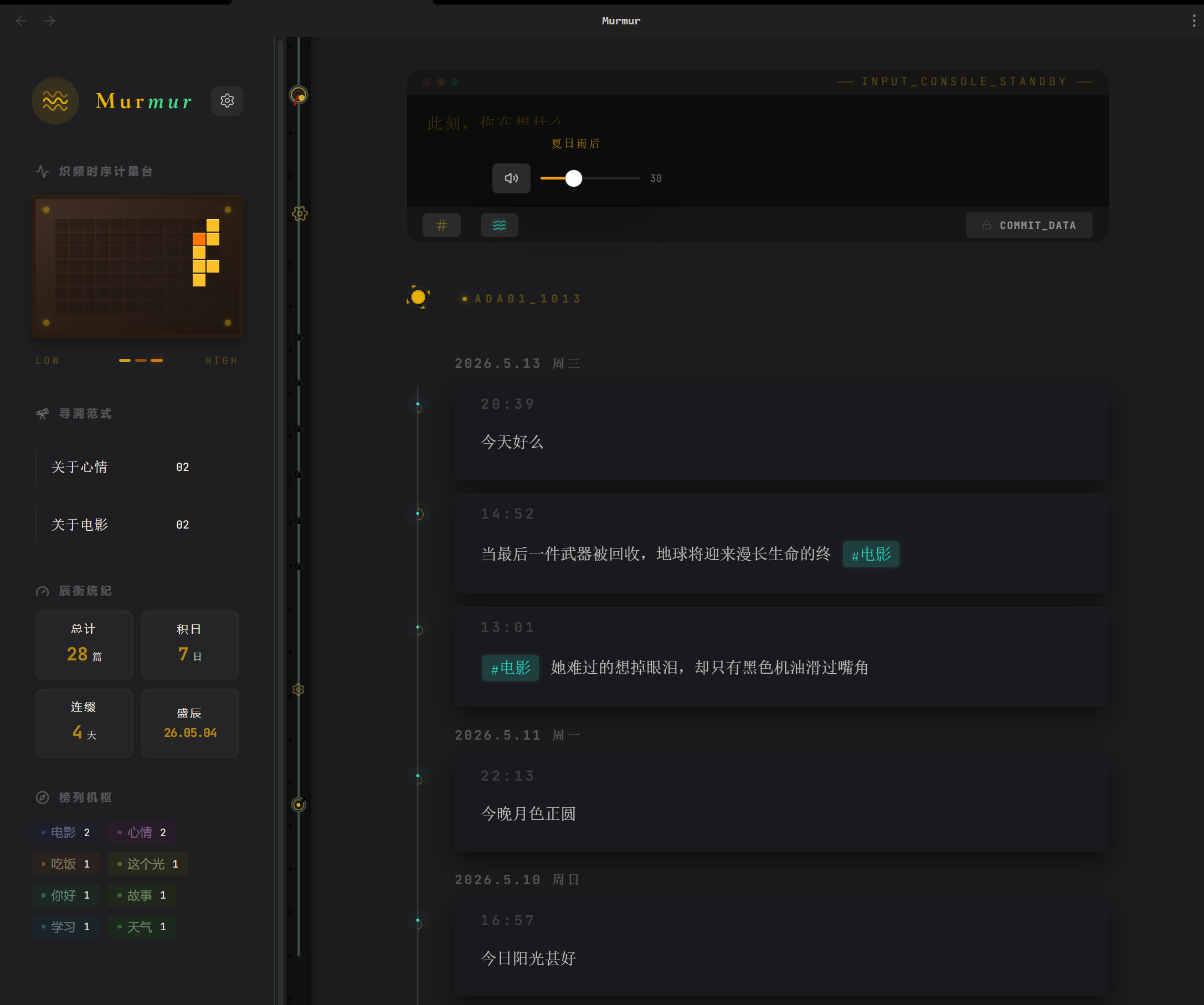
A retro-terminal style inner monologue recorder for Obsidian. Amidst the silent rotation of mechanical gears, turning murmurs into energy fragments.
Features
- Retro-Terminal Aesthetic: A unique design inspired by vintage computing and cyberpunk consoles.
- Daily Timeline: Automatic extraction of content from your daily notes, organized by time.
- Activity Heatmap: Visualize your writing consistency over the past months.
- Zen Background Music: Integrated ambient sounds (Rain, Mountains & Rivers, Birds) to help you focus.
- Responsive Layout: Seamlessly transitions between wide desktop views and compact mobile-friendly sidebars.
- Theme Aware: Perfectly adapts to both Obsidian Light and Dark themes with custom vintage color palettes.
Core Concepts
Murmur uses a unique set of terminologies to describe its functional components:
- Search Paradigms: Forgeable advanced filter chains. Combine tags, text, and dates into a "Paradigm" to slice through your history with precision.
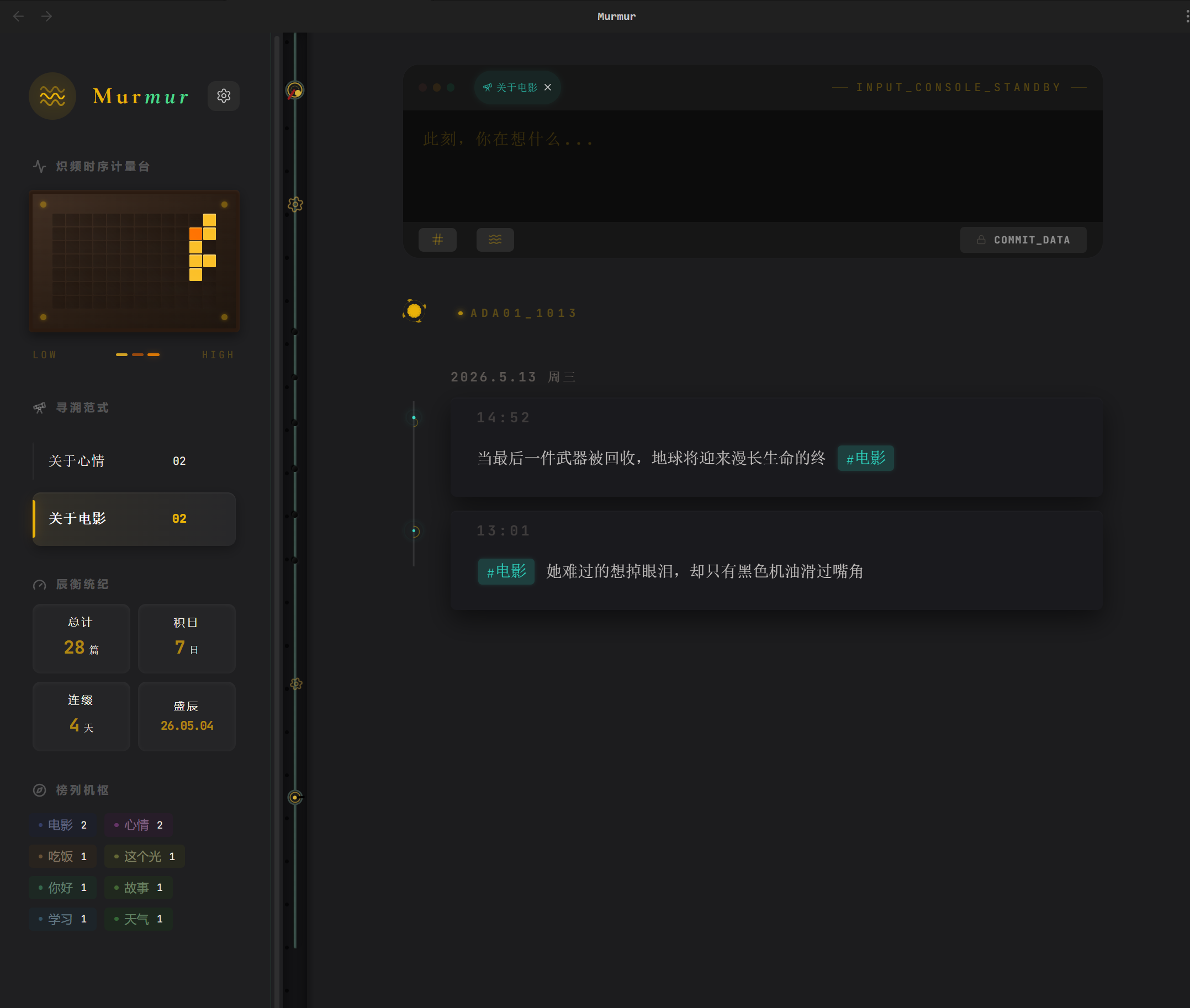
- Murmur Stats:
- Total Days: Total unique days you've recorded a murmur.
- Streak: Your longest consecutive recording streak.
- Peak Day: The specific date with the highest recording density.
- Tag Registry: A dynamic dashboard for your tags, sorted by usage frequency. Each tag is assigned a deterministic visual style based on its name, helping you identify your main train of thought at a glance.
- ADA01_1013: A tribute status code. ADA honors Ada Lovelace, the first programmer; 01 represents her status as "The First"; 1013 marks Ada Lovelace Day (the second Tuesday of October). It signifies a stable, harmonious system state.
Installation
Community Store (Recommended)
- Open Obsidian Settings.
- Go to Community plugins and click Browse.
- Search for Murmur.
- Click Install, then Enable.
Manual Installation
- Download the latest
murmur.zipfrom the GitHub Releases. - Extract the contents of the zip file into your vault's
.obsidian/plugins/murmurdirectory (create themurmurfolder if it doesn't exist). - Ensure that
main.js,manifest.json, and theaudiofolder are all placed directly inside themurmurfolder. - Reload Obsidian and enable the plugin in Community plugins.
How to Use
- Click the Waves icon in the ribbon or use the command palette to open the Murmur view.
- Ensure your daily notes follow a standard date format (like
YYYY-MM-DD). - Click on the Signal Flow (Waves) icon at the bottom to toggle background music.
- Hover over timeline items to see the detail cards.
Configuration
In the plugin settings, you can:
- Enable/disable animations for performance.
- Set default background music and volume.
- Customize the responsive layout threshold.
简体中文
为Obsidian 设计的复古终端式内心独白记录,在无声转动的机械齿轮中,把呢喃低语化为能量碎片
特性
- 复古终端美学:受复古计算和赛博朋克控制台启发而设计的独特风格。
- 每日时间轴:自动从您的每日记录中提取内容,按时间排序。
- 活动热力图:可视化您过去几个月的写作频率。
- 背景音乐:集成环境音(雨声)帮助您集中注意力。
- 响应式布局:在宽屏桌面视图和适配移动端的侧边栏视图之间无缝切换。
- 主题适配:完美适配 Obsidian 的深色和浅色主题,配有自定义复古调色盘。
核心概念说明
Murmur 使用了一套独特的术语来描述其功能组件:
- 寻溯范式 (Search Paradigms):可“锻造”的高级过滤器链。将标签、文本、日期等条件组合成一个持久化的“范式”,精准切开记忆的脉络。
- 辰衡统计 (Murmur Stats):
- 积日 (Total Days):总记录天数。
- 连缀 (Streak):历史最长连续记录天数。
- 盛辰 (Peak Day):单日记录密度最高的时刻。
- 榜列机枢 (Tag Registry):标签的动态仪表盘,按使用频率自动排序。系统会根据标签名称通过算法分配唯一的视觉标识,助你一眼识别思维的主脉络。
- ADA01_1013 (系统状态码):一个致敬代码。ADA 代表史上第一位程序员 Ada Lovelace;01 代表“第一位”;1013 代表全球埃达纪念日(每年 10 月的第二个星期二)。在插件中,它寓意系统运转平稳,数据逻辑圆满。
安装方式
社区插件市场 (推荐)
- 打开 Obsidian 设置。
- 前往 社区插件 并点击 浏览。
- 搜索 Murmur。
- 点击 安装,然后 启用。
手动安装
- 从 GitHub Releases 下载最新的
main.js、manifest.json以及styles.css。 - 将文件移动到
.obsidian/plugins/murmur目录下。 - 重启 Obsidian 或在社区插件设置中点击“重新加载”,然后启用插件。
如何使用
- 点击侧边栏的 Waves 图标或使用命令面板打开 Murmur 视图。
- 确保您的每日记录遵循标准日期格式(如
YYYY-MM-DD)。 - 点击底部的 信号流 (Waves) 图标切换背景音乐。
- 悬停在时间轴项目上查看详情卡片。
配置选项
在插件设置中,您可以:
- 开启/关闭动画以优化性能。
- 设置默认背景音乐及音量。
- 自定义响应式布局的阈值。
Support & License / 支持与许可
Support / 支持
If you encounter any bugs or have feature requests, please open an issue. 如果您遇到任何错误或有功能请求,请提交 issue。
License / 许可
MIT License. See LICENSE for details. MIT 许可证。详情请参阅 LICENSE。