
README file from
GithubYAML Viewer
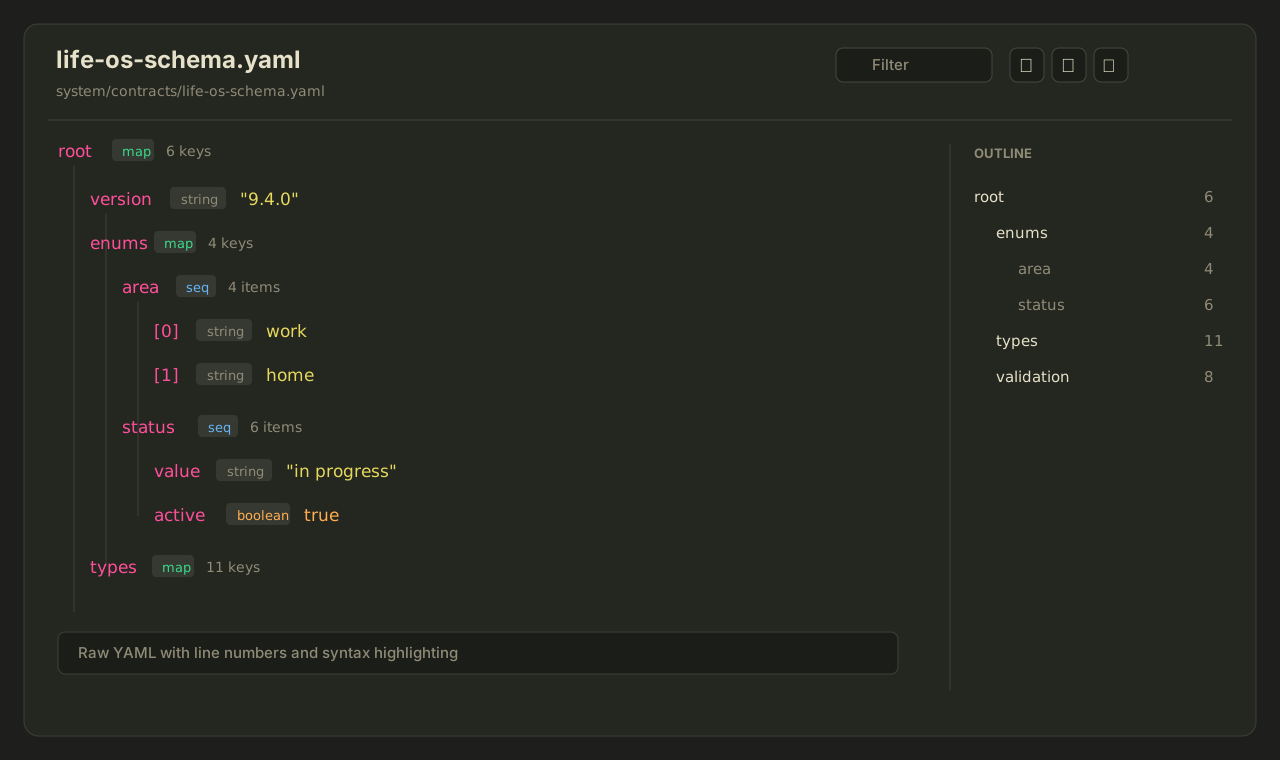
YAML Viewer is a read-only Obsidian plugin for browsing .yaml and .yml files as a structured tree. It is built for schema files, configuration files, data contracts, and other YAML documents where comments and formatting matter.
Features
- Opens
.yamland.ymlfiles in a dedicated Obsidian view. - Shows maps, sequences, scalars, aliases, document comments, node comments, and parse errors.
- Filters the tree by key, value, or YAML path.
- Provides a right-side outline for fast navigation through large YAML files.
- Includes expand/collapse controls, copy raw YAML, and copy-path buttons.
- Shows raw YAML with lightweight syntax highlighting and line numbers.
- Stays read-only by design: it never writes back to your YAML files.
Privacy and clipboard behavior
YAML Viewer does not make network requests and does not send vault content to external services. It writes to the system clipboard only when you explicitly click a copy button, such as copying raw YAML or a YAML path. It does not read clipboard contents.
Why read-only?
YAML files often contain comments, anchors, ordering, and formatting that matter. A form editor can easily reserialize YAML and damage those details. YAML Viewer intentionally does not write to disk, so it cannot reformat or corrupt source-of-truth configuration files.
Installation
Community plugin directory
YAML Viewer is ready for submission to the Obsidian Community plugin directory. Once accepted, it can be installed from Settings -> Community plugins -> Browse inside Obsidian.
Manual installation
Until the community directory submission is accepted:
- Download
main.js,manifest.json, andstyles.cssfrom the latest release. - Create this folder in your vault:
.obsidian/plugins/yaml-viewer/. - Put the downloaded files in that folder.
- Reload Obsidian.
- Enable YAML Viewer in Settings -> Community plugins.
BRAT installation
For beta testing, install the plugin with BRAT using this repository URL:
https://github.com/viggomeesters/obsidian-yaml-viewer
Usage
Open any .yaml or .yml file in your vault. Obsidian will open it with YAML Viewer.
Use the toolbar to:
- filter visible nodes
- expand or collapse the tree
- copy the raw YAML source
- copy individual YAML paths from tree rows
Use the outline panel to jump through large files quickly.
Development
npm install
npm run build
npx tsc --noEmit
For local development, copy or symlink this repository into .obsidian/plugins/yaml-viewer/ inside an Obsidian vault.
Release process
Obsidian installs community plugin files from GitHub releases. For each release:
- Update
manifest.json,package.json, andversions.json. - Run
npm install,npm run build, andnpx tsc --noEmit. - Create a GitHub release whose tag exactly matches
manifest.json.version. - Attach
main.js,manifest.json, andstyles.cssas release assets.
The release workflow in .github/workflows/release.yml can publish those assets after the version has been updated and committed.
Community directory submission
The repository is prepared for Obsidian Community plugin submission. The remaining submission step must be completed by the repository owner in the Obsidian Community site because it requires signing in, linking GitHub, and confirming the developer policies/support commitment.
Submit this repository URL:
https://github.com/viggomeesters/obsidian-yaml-viewer
Steps:
- Sign in to community.obsidian.md.
- Link the GitHub account that owns this repository.
- Open Plugins -> New plugin.
- Enter the repository URL above.
- Confirm the developer policies and submit.
- Address any automated review feedback.
The current release is ready for review:
- root
README.md,LICENSE, andmanifest.jsonexist manifest.json.versionis0.1.2- GitHub release
0.1.2exists - release assets include
main.js,manifest.json, andstyles.css - release assets have GitHub artifact attestations
versions.jsonmaps supported Obsidian versions
Official references: