
README file from
GithubEmber Vault
A companion for the Nimble TTRPG (3.3 rules), built into Obsidian, for both sides of the table. GMs prep and run their game from their own notes: a campaign manager, a searchable compendium of everything in Nimble (525 monsters, every spell, item, class feature and class), a builder for your own monsters, spells and items, quest notes, encounter blocks rated against your party, a combat tracker, GM maps with pins, NPC portrait cards, styled read-aloud boxes and 3D dice. Players get an interactive Nimble character sheet, a party roster, and session notes on the people, places and fights they've met.
If you run one game and play in another, keep both in one vault: every campaign is either one you run or one you play in, and the plugin switches over when you do. It isn't a virtual tabletop.
Website: https://puddinglord.github.io/obsidian-ttrpg-encounter-manager/
Ember Vault is an independent product published under the Nimble 3rd Party Creator License. Nimble TTRPG © Nimble Co. Nimble text is included with permission. This tool is free to use for anyone who already owns the content, is trying the system out, or can't afford it right now. If you enjoy Nimble and are able, please support the game by buying the official books at nimbleRPG.com.
What it does
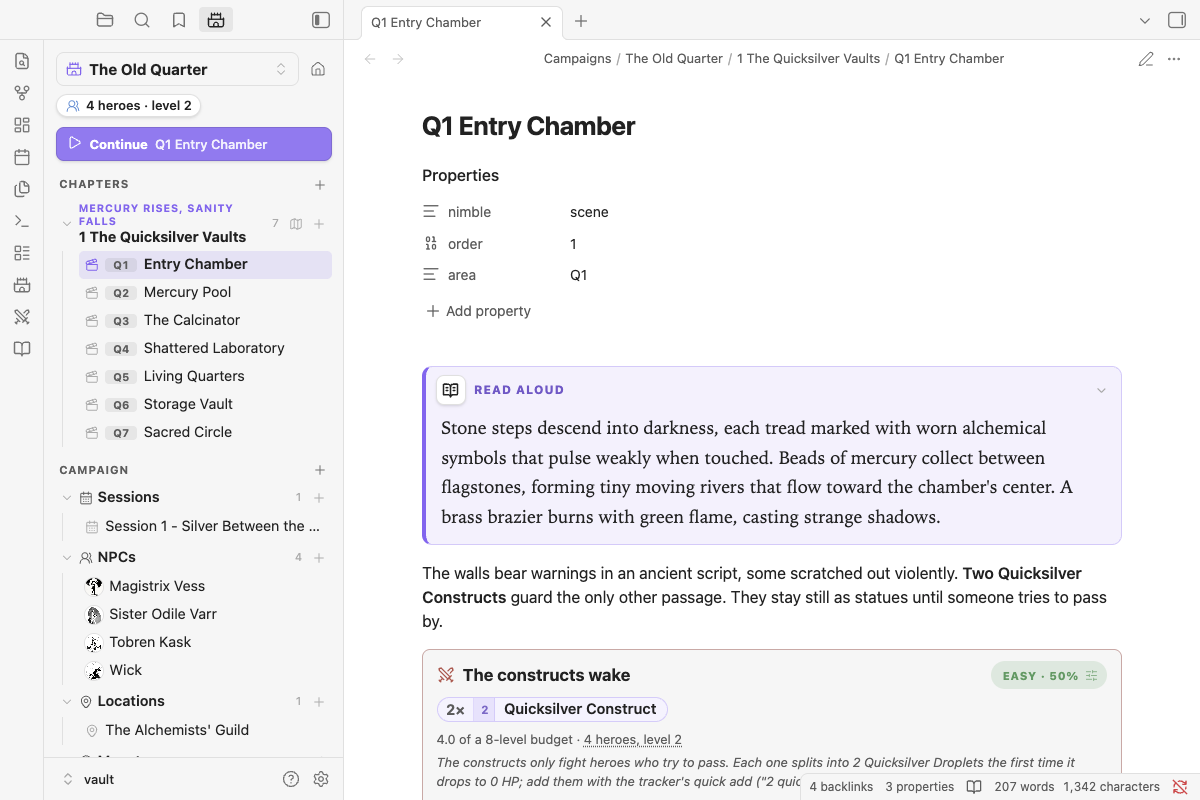
Encounters that know your party. Type /encounter 4 quicksilver hound and you get a block that rates the fight (Easy to Very Deadly) against your heroes, warns you about Nimble's guidelines, and suggests edits to hit the difficulty you want. Run sends it to the tracker.
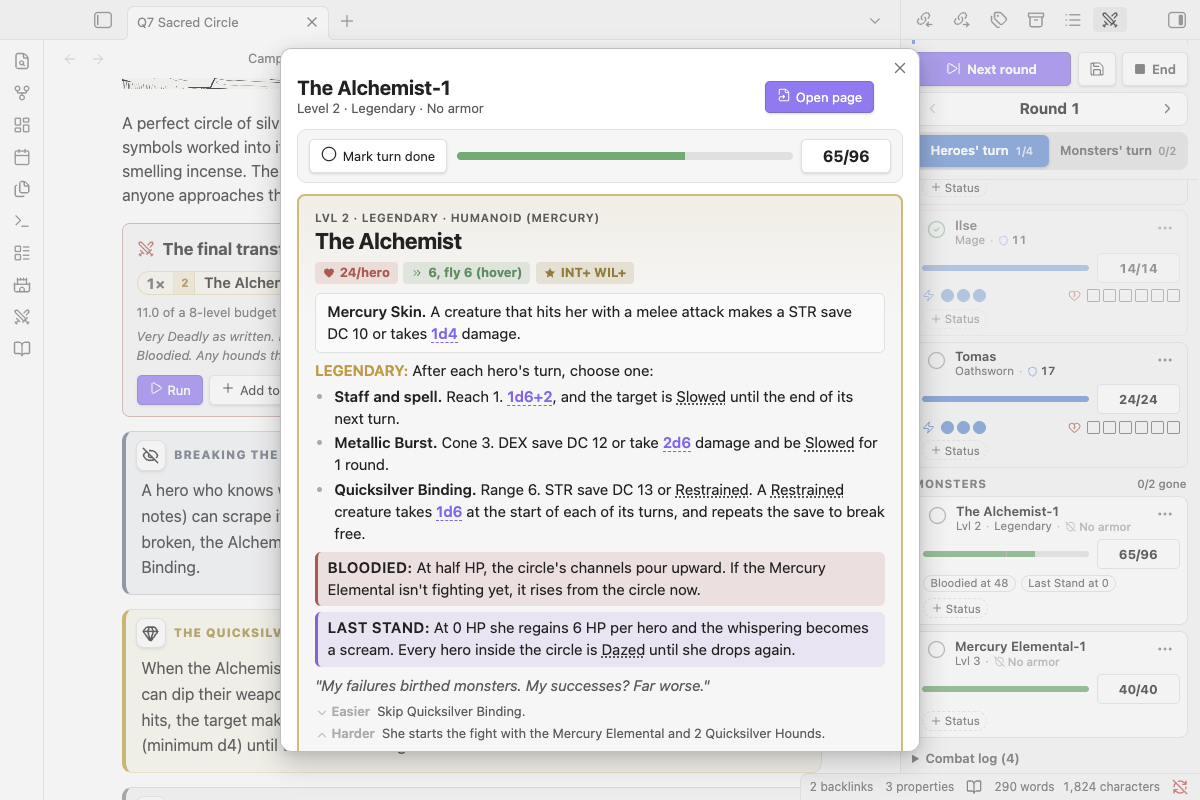
A tracker that does Nimble's math. Heroes go first, then monsters. Tap a monster's HP for a damage calculator that applies crits, armor, vulnerabilities and minion overkill, and shows the math before you commit. Bloodied and Last Stand appear as prompts.
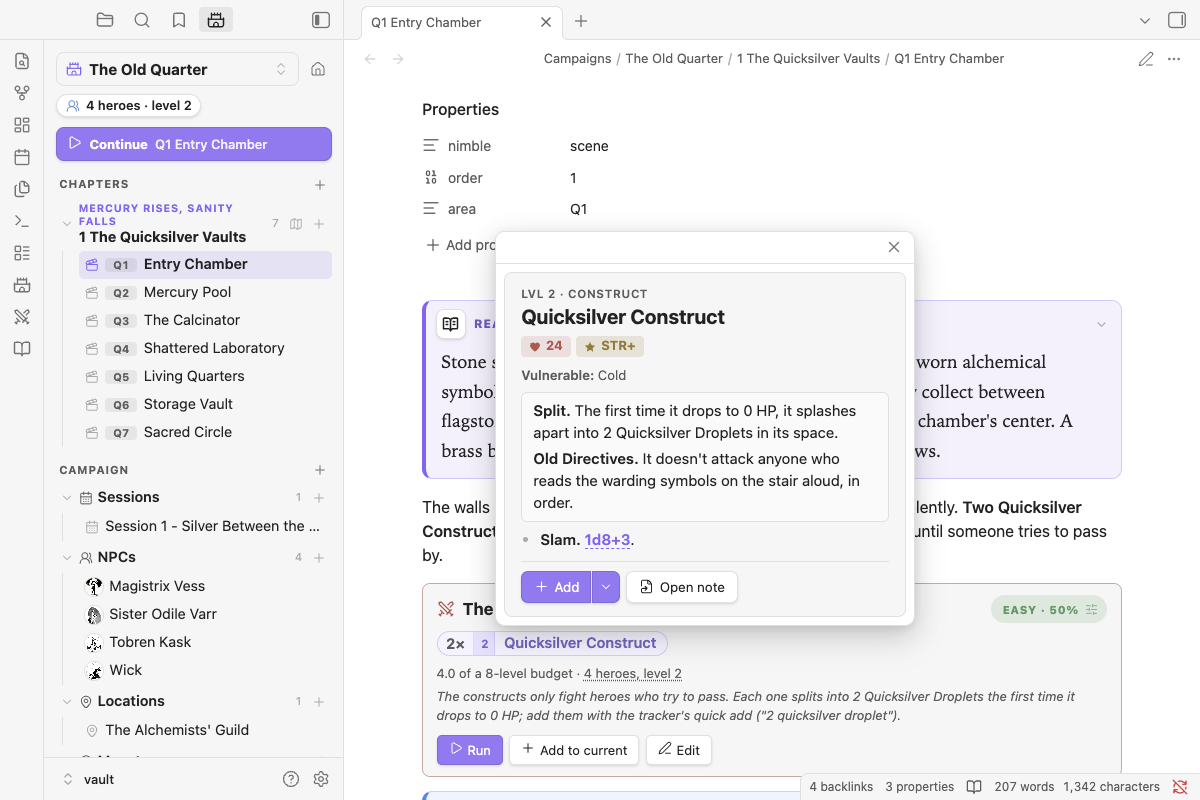
No page jumps. Click a monster pill, an NPC, or anyone in the tracker and their sheet opens in a quick look over what you're doing: the full Nimble stat block (or the NPC's note), with HP, turn, actions and Wounds when they're in the fight. Open page is there when you do want the note.
525 monsters, ready to drop in. Every monster from the Nimble GM Guide and Monsters & More is bundled and searchable. Hover any `nimble:Goblin` reference for its stat block, or write your own monsters as notes.
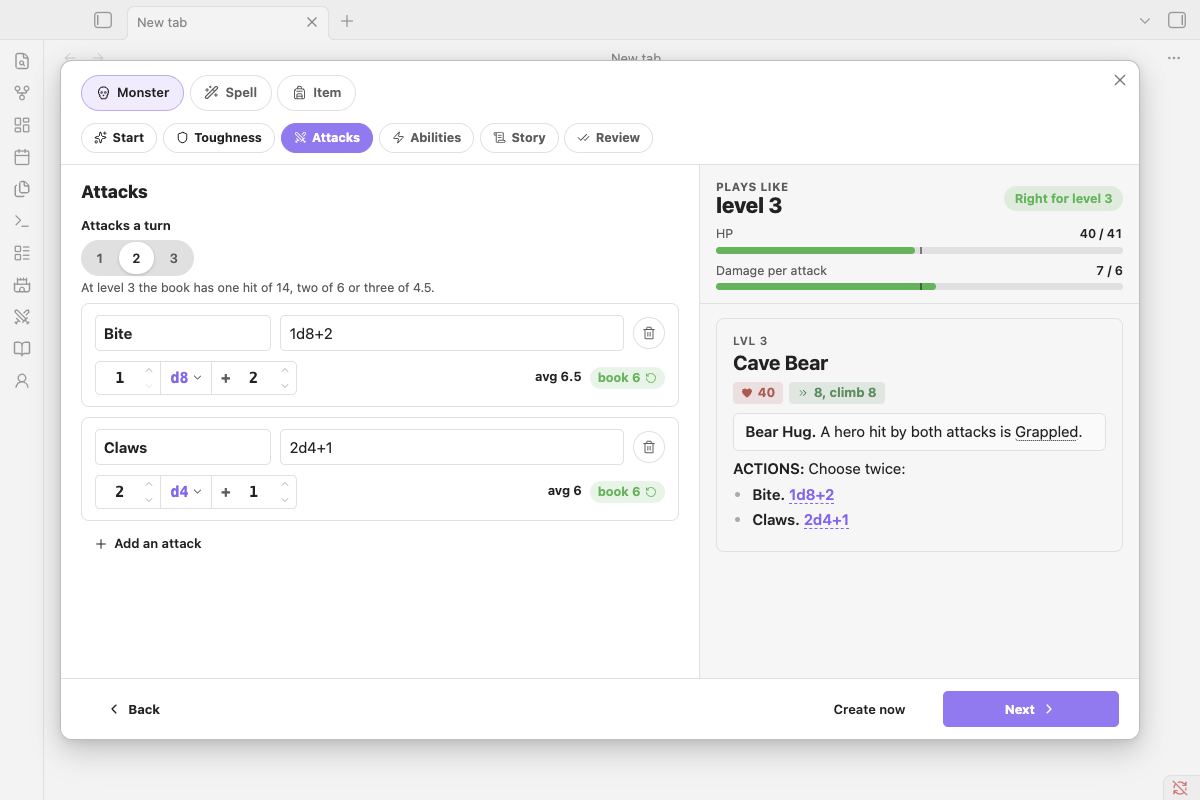
Make your own monsters on the book's numbers. Run New monster…, pick a role and a level, and press Create now for a stat block with the GM Guide's HP and damage for that level. Or type your own numbers and the level check says what they play like. Spells and items work the same way, and homebrew spells and items join the compendium. See the builder.
Quests that keep score. Every job gets a note in the campaign's Quests folder: the hook, objectives, the truth behind it and the reward. Link one anywhere with /quest; finished quests get a tick and sink below the open ones. See Quests.
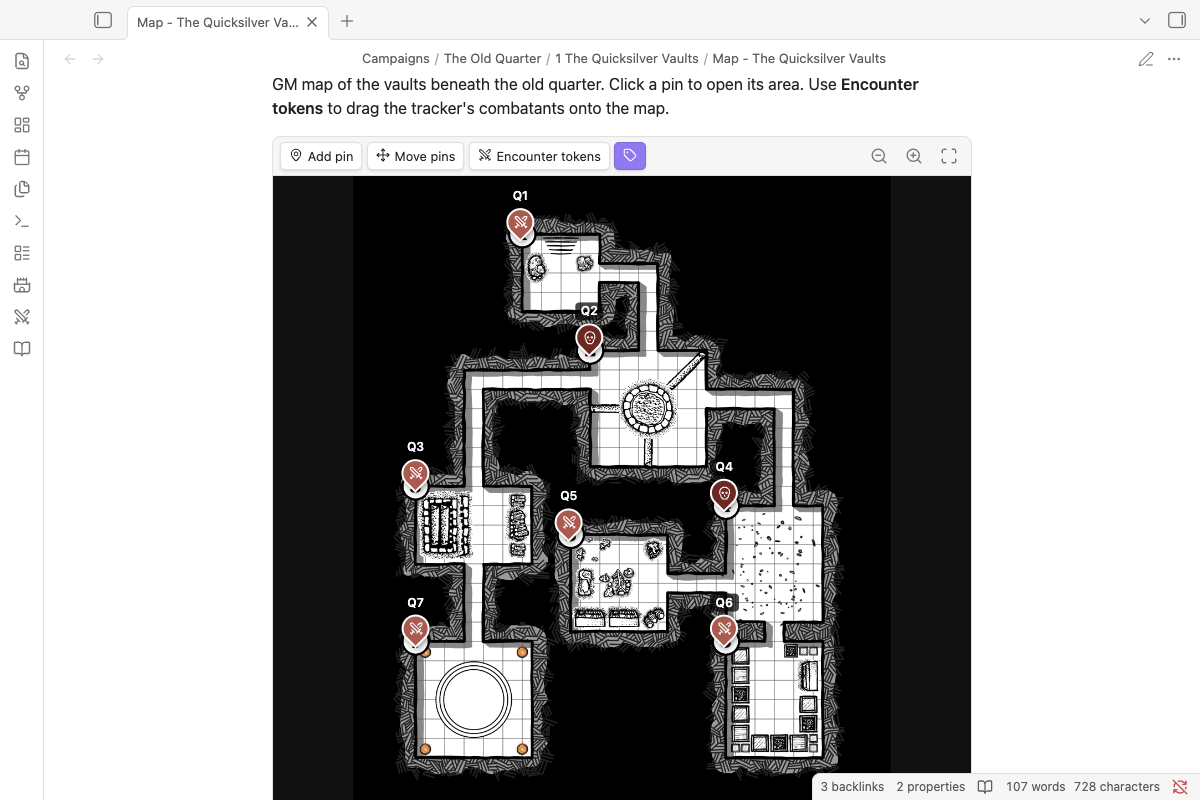
Maps with pins. Put a pin on every room, linked to its note. Drag the tracker's combatants onto the map as tokens.
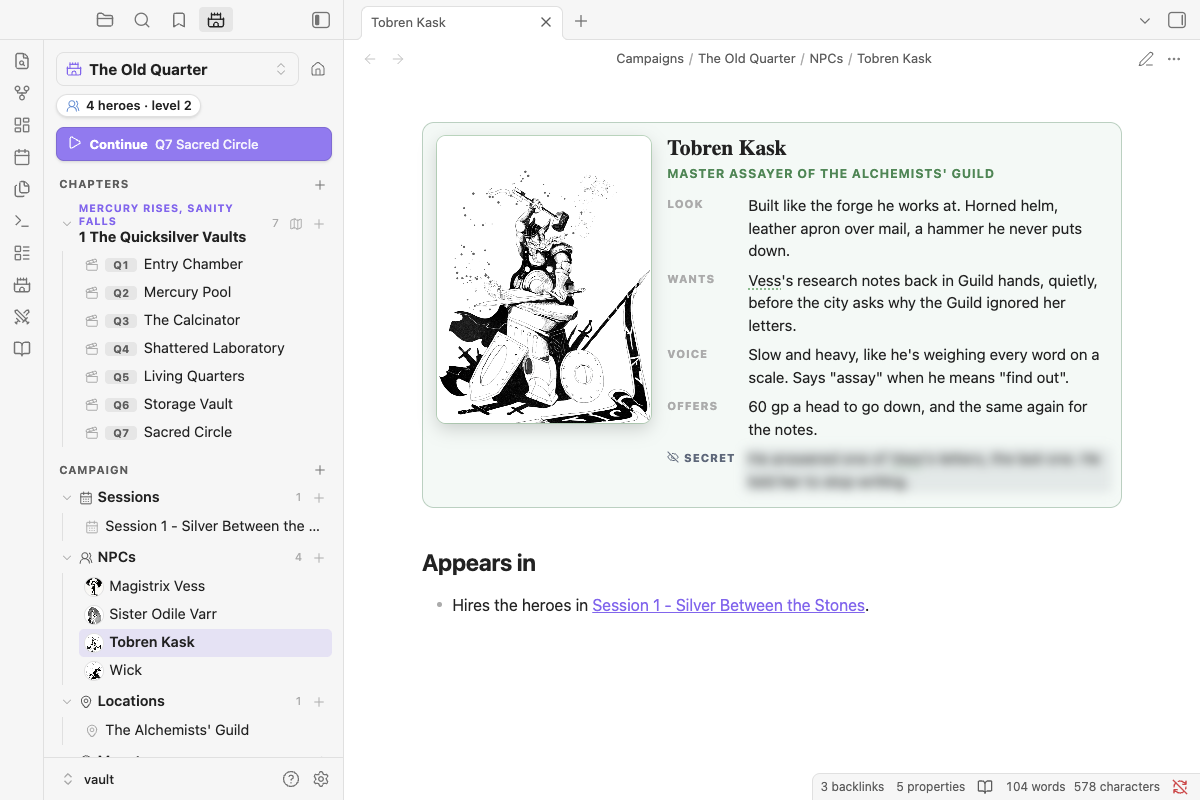
NPCs with faces. Give an NPC a portrait and they get a character card, with a blurred secret you can reveal when your screen isn't shared. Their name is linked wherever you mention it.
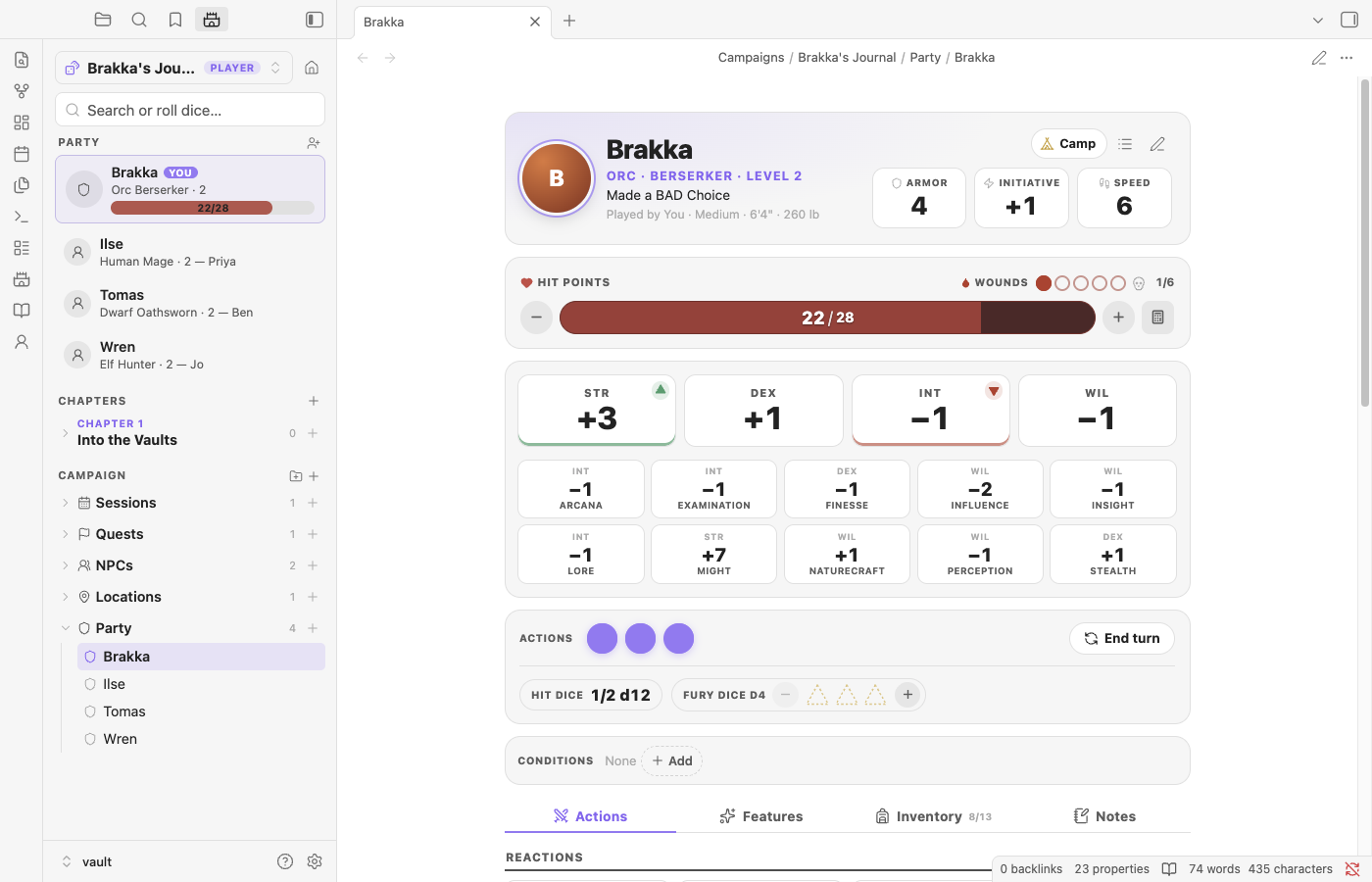
Play, too. Make a campaign you play in and your character lives in a note: an interactive version of the official sheet where you tap a stat to roll a save, tap HP to take a hit, and add gear and spells from every Nimble class book. Monsters show what your hero could know instead of their stat blocks, and encounter blocks become battle notes. See Playing in a campaign and Character sheets.
And more:
- campaigns, chapters and scenes in a sidebar panel
- links to quests, places and heroes that show as pills with their icon
- Spotlight (Cmd/Ctrl+K) to find anything, roll dice and add monsters
- help with stat blocks you write, with fixes for lines it can't read
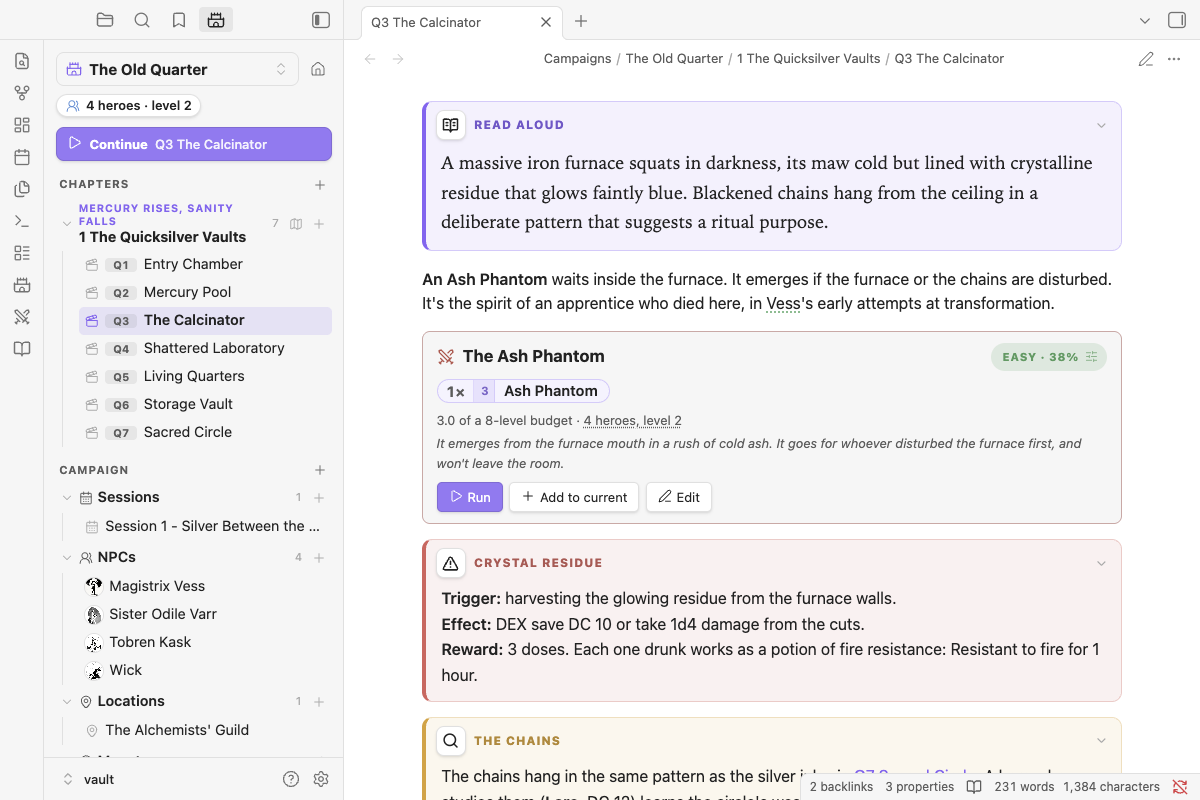
- read-aloud, trap, treasure and clue boxes
- clickable dice and 3D dice
- slash commands for everything
- a full phone and iPad layout
Install
In Obsidian, open Settings → Community plugins → Browse, search for Ember Vault, then Install and Enable.
Try the sample adventure
The Quicksilver Vaults is a ready-made vault: a seven-room dungeon with a map, NPCs, custom monsters, a legendary boss and a party already set up. Download Ember-Vault-Sample-Adventure.zip, unzip it, open the folder as a vault, and follow its Start Here note.
Quick start in your own vault
- Open Settings → Ember Vault and add your party (name, class, level, HP, Defense).
- Type
/in a note:/encounter 3 goblin, 2 wolfwrites an encounter block rated against your party. - Click Run on the block. The tracker opens with the monsters and your heroes.
- Click Start combat. Heroes go first; tick each one off as they act, then the monsters go. Click Next round.
User guide
The full guide is in docs/:
- Getting started
- Campaigns
- NPCs and portraits
- Quests
- Boxes
- The compendium
- Bestiary and stat blocks
- The builder
- Encounters
- GM maps
- Combat tracker
- Dice
- Spotlight
- Slash commands
- Phone and iPad
- Settings
- FAQ
What changed in each release: CHANGELOG.md, or the changelog on the site.
Privacy
- No network use. The plugin makes no network requests and sends no data anywhere. There are two exceptions, both things you ask for: an NPC portrait you set to an
https://image URL loads from that address, and Import link in the 3D dice settings downloads the dice set at the link you paste. - Clipboard. It writes to the clipboard only when you click a Copy button (encounter summaries, roll results, encounter blocks).
- Your files. Everything it writes is plain Markdown in your vault, plus its own settings file.
License and credits
The plugin's code is MIT-licensed. Bundled Nimble content and the third-party libraries it uses are listed in NOTICE.md.
Development
See CLAUDE_CODE_GUIDE.md. Releasing and the landing page (site/) are covered in RELEASING.md.
| Command | Does |
|---|---|
npm test |
Unit tests |
npm run lint |
Obsidian's review rules: ESLint for the code, stylelint for styles.css (also run in CI on every PR) |
npm run test:e2e |
Drives a real Obsidian |
npm run screenshots |
Regenerates docs/images/ from the sample vault |
The bestiary comes from scripts/bestiary/ (python3 -I scripts/bestiary/merge.py).